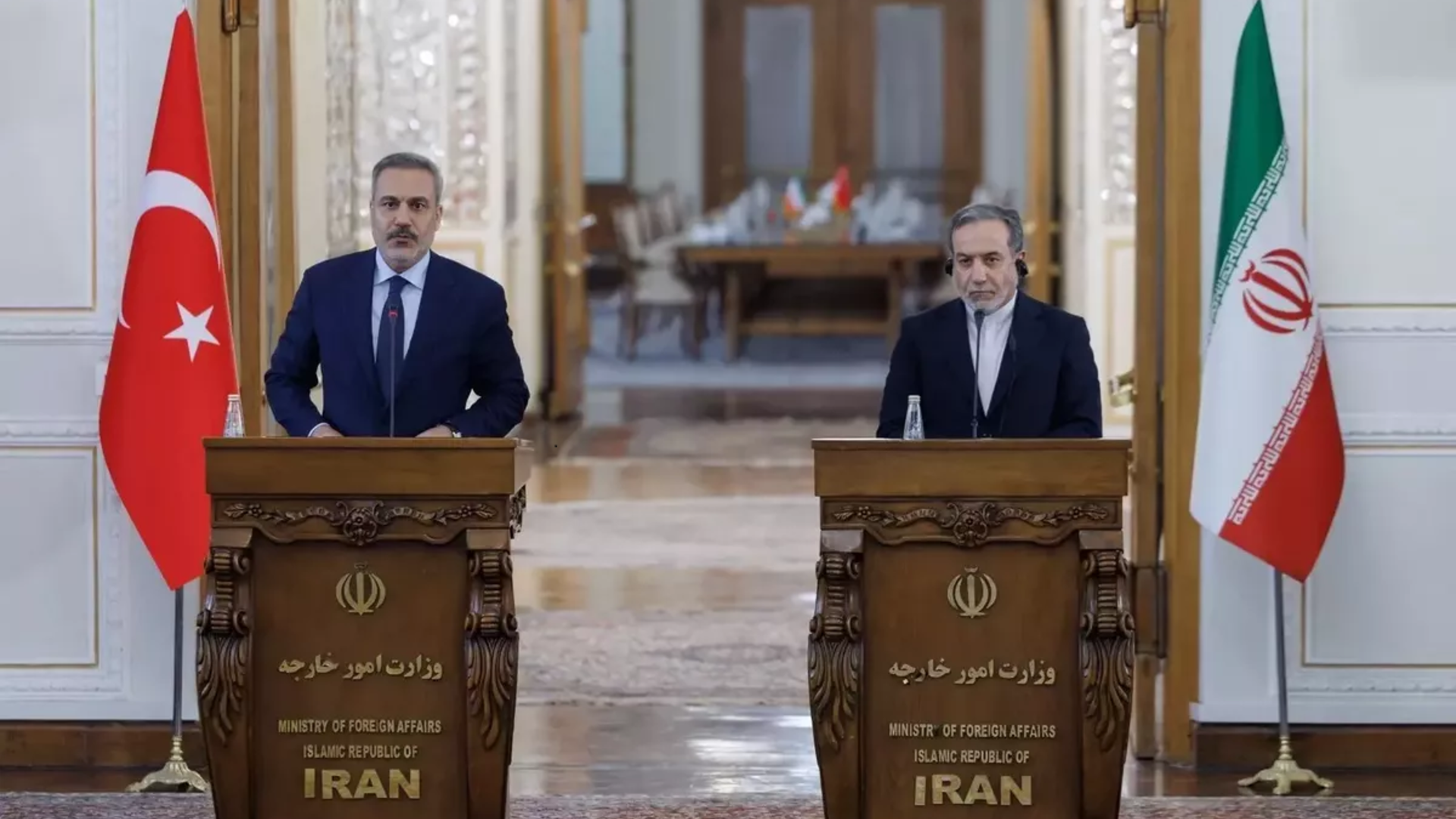
Is it possible for a NATO member to emerge as a mediator in the current war between the U.S. and Iran? Türkiye would say yes. When the recent ceasefire was being negotiated, the Turkish intelligence service reportedly helped maintain communication between Iran and Western governments. Erdoğan immediately welcomed the agreement and urged for it to be fully implemented. This was not the first time Ankara had attempted to act as a mediator. Earlier in the conflict, Türkiye is also said to have relayed messages aimed at de-escalation and had previously expressed interest in organizing direct talks between the U.S. and Iran, even before the war broke out in late February.

For Sevil Turan of Yeşil Düşünce Derneği (Green Thought Association), that mediating role is not as surprising as it might seem from the outside. In an interview IFG conducted with her, she described Türkiye as a state that has been trying to find a balance between regional ties, Western alliances, and its own claim to strategic importance for years. 

Strategic Ambiguity as Foreign Policy

Türkiye’s role is not neutral; neutrality would imply a greater distance from the conflict than Ankara actually has. The country is too vulnerable to the consequences of regional conflicts. Strategic ambiguity is a more accurate description. Ankara remains part of the Western security order but opposes being reduced to that role. It continues to engage with Washington while also maintaining ties with Tehran. From the outside, this may seem contradictory. This ambiguity, however, has become one of the defining aspects of Turkish foreign policy.

“ Earlier foreign policy was more Western-oriented and secular. Over the past twenty years, however, Ankara has increasingly focused on its historical, political, and cultural ties with the Middle East.  ”
Sevil Turan Yeşil Düşünce Derneği (Green Thought Association)

Turan pointed out that this ambiguity is linked to the longer-term development of Turkish foreign policy. This did not mean that it abandoned its Western alliances, it meant that it added a more assertive regional role to these alliances. 

Why Türkiye Still Has Diplomatic Access

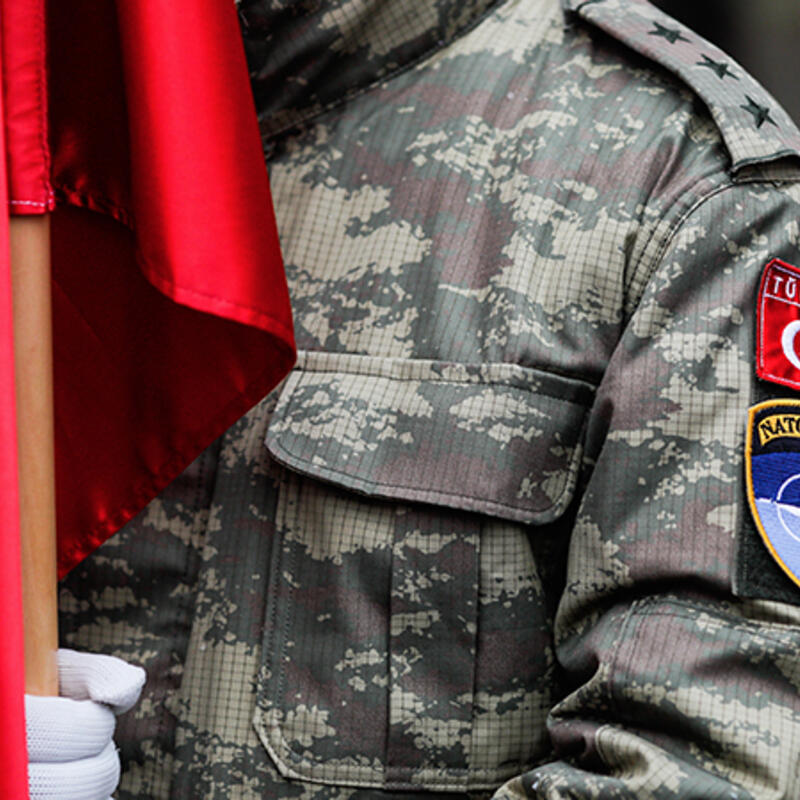
This is clearly seen in Türkiye’s relationship with the European Union. Officially, the country remains a candidate for EU membership. In reality, accession negotiations have been at a standstill since 2018. But the relationship has never truly been frozen. The EU still cooperates with Ankara on migration, trade, and regional security, while Ankara remains economically and politically dependent on Europe. The same applies to the country’s position within NATO. Relations with some allies are strained, but no one treats Türkiye as insignificant. During a visit to Ankara in November 2024, NATO Secretary General Mark Rutte emphasized that Türkiye has NATO’s second-largest army and spends more than 2% of GDP on defence

TurkiyeNato

Mediation is something Ankara is increasingly trying to turn into policy. For years, Türkiye has positioned itself as a mediator in regional conflicts and, in 2024, established a Directorate General for International Mediation within the Ministry of Foreign Affairs. This suggests that mediation is something Ankara increasingly wants to make part of its diplomatic identity. Its geographical location is, of course, also a reason why it is eager to fulfil this role. Türkiye borders unstable regions, lies close to crucial trade and energy routes, and is much closer to the crises in the Middle East than most European countries. But geography alone does not make a mediator. What counts is access to actors who are no longer openly speaking to each another, and Türkiye has that.

Turan also emphasized that Türkiye’s value as a mediator has to do not only with its location, but also with how the country is perceived. Despite years of domestic political tensions, economic problems, and social unrest, Türkiye is still widely regarded as a durable state in an unstable region. Mediators do not need to be trusted by everyone, but they must be taken seriously. Türkiye possesses the institutional capacity and regional influence to ensure that others have to remain in dialogue with the country, even when relations are strained.

The relationship with Iran makes this particularly clear. It is a long-standing relationship between two states that recognise that they cannot ignore one another. Formal ties have been maintained over the years, including through high-level political dialogue, and both sides continue to recognize the importance of open communication. As Turan noted, the border between Türkiye and Iran has shown a rare degree of continuity in a region where borders are often the subject of repeated conflicts. Iran and Türkiye recognize each other as resilient powers that cannot easily be ignored, and neither has much to gain from allowing competition to escalate into open confrontation. 

Between Tehran and Washington

Turan clearly described this tension: Türkiye wants workable relations with both Iran and the United States. It does not want a stronger, strategically more confident Iran, and certainly not a country with greater influence due to nuclear capabilities. But neither does it benefit from a large-scale war that would destabilize the region even further. Ankara does not fully align itself with Tehran, but it also does not want to be forced into an anti-Iranian position if that means losing diplomatic access to the country.

TurkiyeInflation

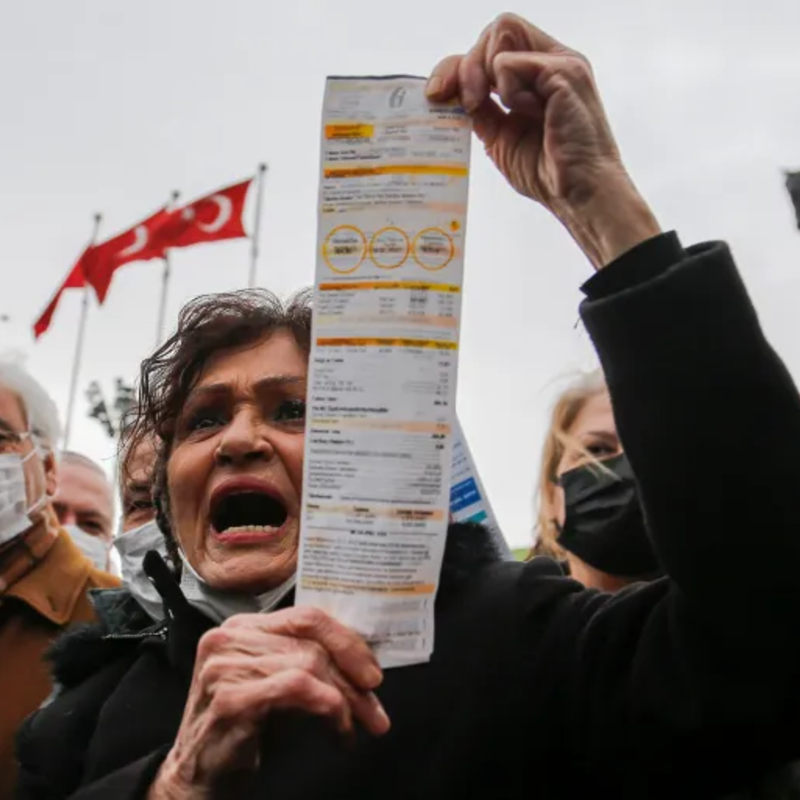
Maintaining diplomatic access is even more important now. Türkiye has little to gain from a conflict that spreads further. A larger war would entail costs on multiple fronts: trade, energy, domestic stability, and security. Higher fuel and raw material prices would directly lead to inflation at a time when the Turkish economy is already under severe pressure. Regional escalation could also trigger new displacement and refugee flows, something Türkiye remains highly sensitive to after years of absorbing the social and political consequences of wars in the region. Even though Ankara projects confidence abroad, it faces real vulnerabilities at home. 

Another point to consider is that this ambiguity does not stop at the border. In Türkiye, foreign policy rarely remains foreign for long. Regional crises are quickly felt at home, and inflation fuels daily frustration. The burden is unevenly distributed, but it is felt everywhere. Turan noted that Turkish society has, in a sense, grown used to repeated shocks and instability. But familiarity should not be confused with resilience without a cost. Crises may become normalized, but they still deepen poverty, inequality, and insecurity.

Foreign Policy and Domestic Legitimacy

At the same time, moments like these can also benefit the government politically. By pursuing an active foreign policy, Erdoğan can position himself as a leader who is active on the international stage, even when discontent over the economic situation at home continues to grow. Diplomacy, mediation, and regional leadership all contribute to that image. As Turan suggested, external crises can push domestic problems out of the spotlight, or at least shift public attention. That does not mean that foreign policy can eliminate inflation or declining living standards. It cannot. But it can help maintain political legitimacy at a time when it is more difficult to claim it domestically.

We do, however, have to be careful to not overestimate Türkiye’s influence during this conflict. Holding a favourable position is not the same as determining the outcome. While Ankara can relay messages, organize talks, or contribute to broader diplomatic efforts, it has no control over the main driving forces behind the conflict. Turan was cautious on this point as well. Türkiye can be useful, but usefulness should not be confused with dominance.

That is ultimately the position in which Türkiye finds itself: trying to maintain its influence, contain the fallout of regional escalation, and protect its own strategic interests in a region that is becoming increasingly unstable. But this approach is also important for domestic politics. In a period marked by economic tensions and political discontent, foreign policy allows Erdoğan to project leadership and to translate that image back into domestic legitimacy. That helps explain why Ankara continues to rely on strategic ambiguity, as not just a way of navigating regional crisis, but also a way of reinforcing political authority at home.