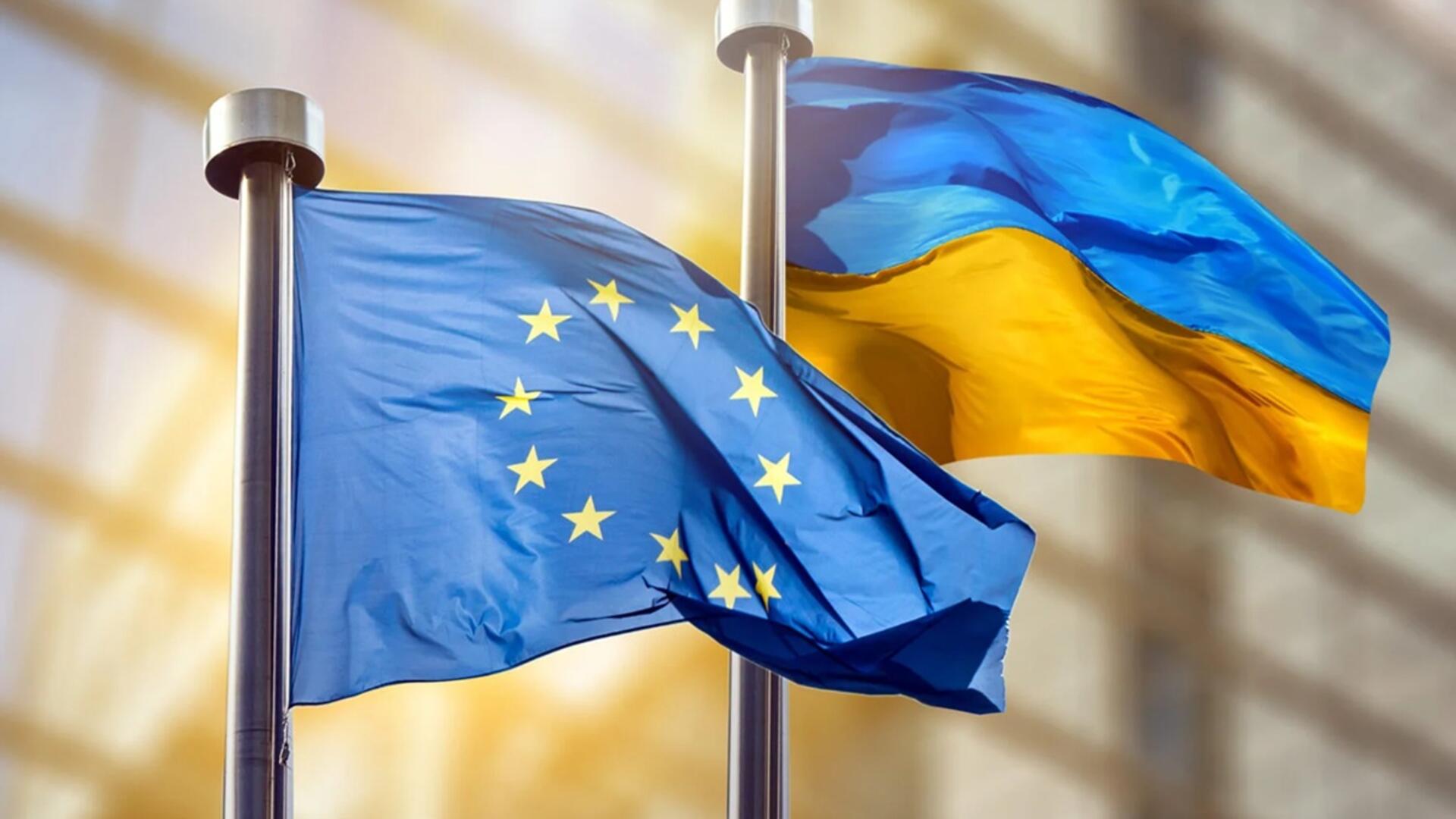


EU enlargement is back on the agenda. After Russia’s full-scale invasion of Ukraine in 2022 and following growing uncertainty about the United States’ role in Europe, EU leaders have increasingly stressed the need to expand the Union. Closer cooperation with countries in Eastern Europe and the Western Balkans is seen as important for the continent’s security and independence. 

Yet joining the EU is a complex process. Since reforms in 2021, candidate countries must complete negotiations across 32 policy “chapters”, grouped into six thematic “clusters”. These reforms aim to bring national laws and institutions in line with EU standards. Much attention is usually given to the so-called “fundamentals” cluster, which covers areas such as the rule of law and public administration. However, other clusters are equally demanding.  

Particularly challenging and complex is Chapter 27, on Environment and Climate Change. Its demands are aligned with the European Green Deal, which aims for climate neutrality by 2050, and thus requires major investments, strong administrative capacity and coordination between institutions. It also has major social consequences for candidate countries, especially those where jobs and energy systems still depend heavily on fossil fuels. 

In this series, we examine how candidate countries are coping with the challenges presented to them by the climate chapters of the EU accession procedure. We analyse their progress on reforms, and focus on the complex dynamics of green transition, democratic legitimacy, and social changes. This article zooms in on the final candidate country of this series: Ukraine.
Different conditions

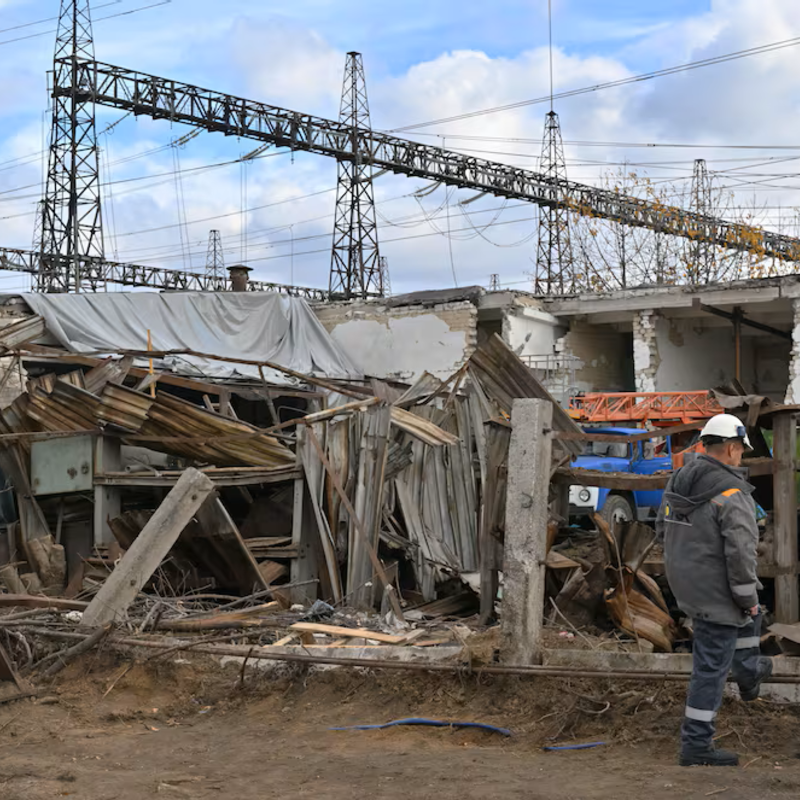
Since Ukraine was granted EU candidate status in 2022, the country has had to pursue reconstruction, modernization, and alignment with the EU acquis at the same time. Unlike other candidate countries, the country is not only adapting its laws, institutions and standards to meet EU requirements, but it is also doing so while dealing with the devastation caused by the war. Reconstruction, in this case, is not something that can wait until the war is over. Even while fighting and bombardments continue, damaged infrastructure has to be repaired, as communities need access to electricity and heating.

damage

Key energy infrastructure, including power plants, substations, gas facilities and transmission networks, remain vulnerable to missile and drone attacks. Sergii Kurykin from Partija Zelenykh Ukrainy (PZU) explained what that does to policy: “achieving perfect solutions is impossible,” and “the search for potential compromises can be really painful.” For a country working on reconstruction under wartime conditions, this raises an important question: how can reconstruction also contribute to progress toward Chapter 27?

The connection between reconstruction and reform is important for Chapter 27. The Ukraine Facility, set up in March 2024,  provides up to €50 billion for Ukraine’s recovery, reconstruction, and modernization over 2024-2027. The Facility does more than provide money. It ties reconstruction funding to reforms that will shape what kind of country Ukraine rebuilds into. Every decision about what gets rebuilt, and how, also shapes whether Ukraine’s recovery can support a greener and fairer transition.

Chapter 27 also asks whether environmental standards can be monitored and enforced in practice. For Ukraine, this is a difficult task. The European Commission’s Ukraine Report 2025 highlights that limited administrative capacity, funding constraints and delayed legislation are the main obstacles to the effective implementation of the EU acquis in the field of the environment and climate. It also points out the need to strengthen enforcement, monitoring and data collection. The challenge for Ukrainian institutions is to monitor, enforce and implement environmental legislation effectively during reconstruction, while administrative capacity remains constrained.

Diversification of energy sources 

Ukraine is trying to align with EU rules while most of the population is operating in survival mode. Kurykin notes outsiders often underestimate how difficult life has become “even in the fully controlled Central and Western regions.” He mentioned that this winter, all available resources to survive were used, including diesel generators that do not meet sustainability standards. 

However, the renewable energy sector in Ukraine is not starting completely from scratch. In 2024, the Ukrainian Solar Energy Association estimated that approximately 800-850 MW of new photovoltaic solar energy capacity had been added. Ukraine has also approved a plan to increase the share of renewable energy in its energy mix to 27% by 2030, partly through the introduction of 10,000 MW of new generation capacity from renewable sources. 

According to Kurykin, reconstruction should not be limited to only repairing what has been destroyed, but should also be seen as an opportunity to modernize Ukraine’s energy system in line with EU standards. This means that damaged electricity and heating facilities should be replaced with cleaner, more efficient infrastructure that better meets the requirements of European integration. 

He also pointed to the need to promote European ideas and experience on energy saving and energy efficiency. At the same time, PZU emphasizes that progress toward EU compliance will depend on more than legal reforms. Given their experiences during the war, they argue that the energy system must be restructured with a focus on resilience.

“ The diversification of energy sources and their decentralization is the most obvious conclusion, as well as a need for physical protection. ”
Sergii Kurykin Partija Zelenykh Ukrainy (PZU)

Implementation is therefore not just a legislative question, but also a practical one, as it needs to serve as protection. PZU is trying to address the practical matter at the local level through several projects. Through the Readiness to Challenges project, they worked with communities where they have local councillors (including Khotyn, Kaniv, Samar, Pidgorodne) via conferences, training and roundtables, with the goal to produce policy advice for local authorities. 

Making compliance legitimate

Another important point to consider is the perception of citizens. The community discussions PZU held also revealed why legitimacy matters for compliance. On nuclear energy, Kurykin reported that despite awareness of risk and the memory of Chernobyl, “the majority support the use of nuclear power plants (with high safety standards, of course).” On renewables, the message is yes, although concerns were also mentioned, including land use for solar energy, the impact of wind power on landscapes and nature, and waste and recycling issues.

Finally, Kurykin emphasized the “just” in just transition. EU accession requirements need to be explained clearly, including why they exist and how they have been implemented in other member states. “The transition costs should not be transferred to household consumers.” On accession legitimacy, they argue requirements need clear explanation: “Explanations of the nature, roots, and needs of these requirements are needed,” and they call for “direct international partnership on the communities level.” 

A just transition also means looking further than the technical question of which energy sources Ukraine should rely on. We also need to consider which communities are most affected, and whether reconstruction can reduce inequalities rather than reinforce them. Many regions in Ukraine are dependent on fossil fuels. Building cleaner infrastructure can support climate targets, but it should also remain just for the affected communities. If energy efficiency or investments in renewable energy are discussed purely as technical upgrades, there is a risk that the social dimension will be lost.

For Chapter 27, the real test is not only whether Ukraine can go green, but whether it can do so in a way that remains resilient, legitimate and socially fair. Ukraine’s path towards EU accession and energy-related commitments may still be possible, but it will depend on whether reforms can be carried out while reconstruction, energy security, and public support remain under pressure.