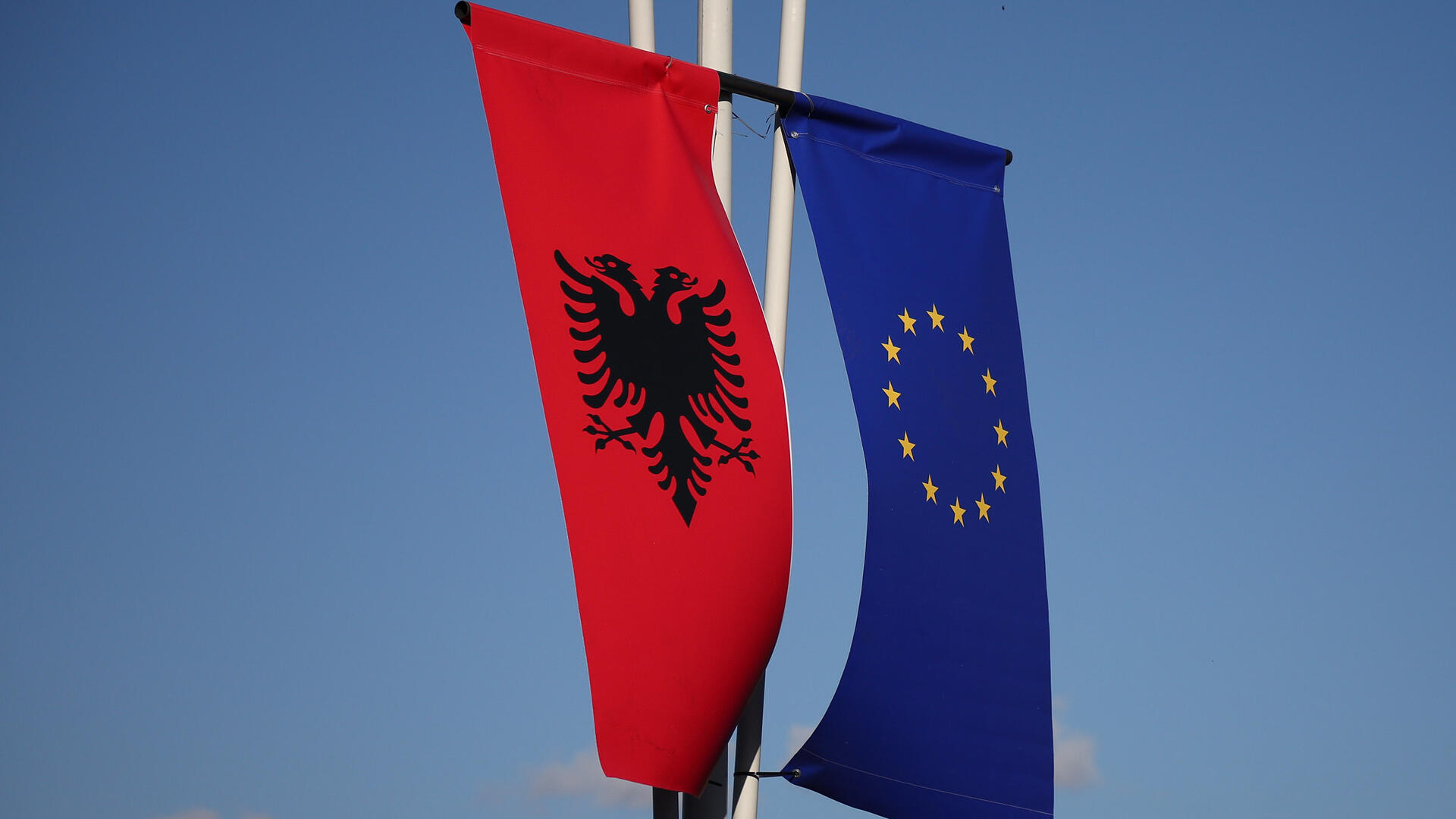


EU enlargement is back on the agenda. After Russia’s full-scale invasion of Ukraine in 2022 and following growing uncertainty about the United States’ role in Europe, EU leaders have increasingly stressed the need to expand the Union. Closer cooperation with countries in Eastern Europe and the Western Balkans is seen as important for the continent’s security and independence. 

Yet joining the EU is a complex process. Since reforms in 2021, candidate countries must complete negotiations across 32 policy “chapters”, grouped into six thematic “clusters”. These reforms aim to bring national laws and institutions in line with EU standards. Much attention is usually given to the so-called “fundamentals” cluster, which covers areas such as the rule of law and public administration. However, other clusters are equally demanding.  

Particularly challenging and complex is Chapter 27, on Environment and Climate Change. Its demands are aligned with the European Green Deal, which aims for climate neutrality by 2050, and thus requires major investments, strong administrative capacity and coordination between institutions. It also has major social consequences for candidate countries, especially those where jobs and energy systems still depend heavily on fossil fuels. 

In this series, we examine how candidate countries are coping with the challenges presented to them by the climate chapters of the EU accession procedure. We analyse their progress on reforms, and focus on the complex dynamics of green transition, democratic legitimacy, and social changes. This article zooms in on another candidate country: Albania.
Current progress

Albania wants to close accession negotiations by 2027. This timeframe comes with a high pace and a lot of pressure. Part of the accession negotiations are the necessary environmental reforms; Albania must tick off nine big milestones in this area. For some of these milestones, the EU can allow a so-called ‘grace period’, meaning Albania is allowed to finish parts of the work after joining the EU. But climate does not come with that breathing space, there is no grace period foreseen. 

The European Commission’s 2025 report on Albania mentions that “alignment with the EU acquis on climate remains limited and no particular development was reported on addressing climate change”. Although the report is mostly critical, it does point to a few limited positive developments. These include steps to bring Albania’s spatial data rules closer to EU standards, the completion of the National Geoportal which improves access to geographic and environmental information, local climate adaptation plans in eight municipalities, progress on five river basin plans meant to improve water management, and some anti-corruption action in environmentally sensitive cases.

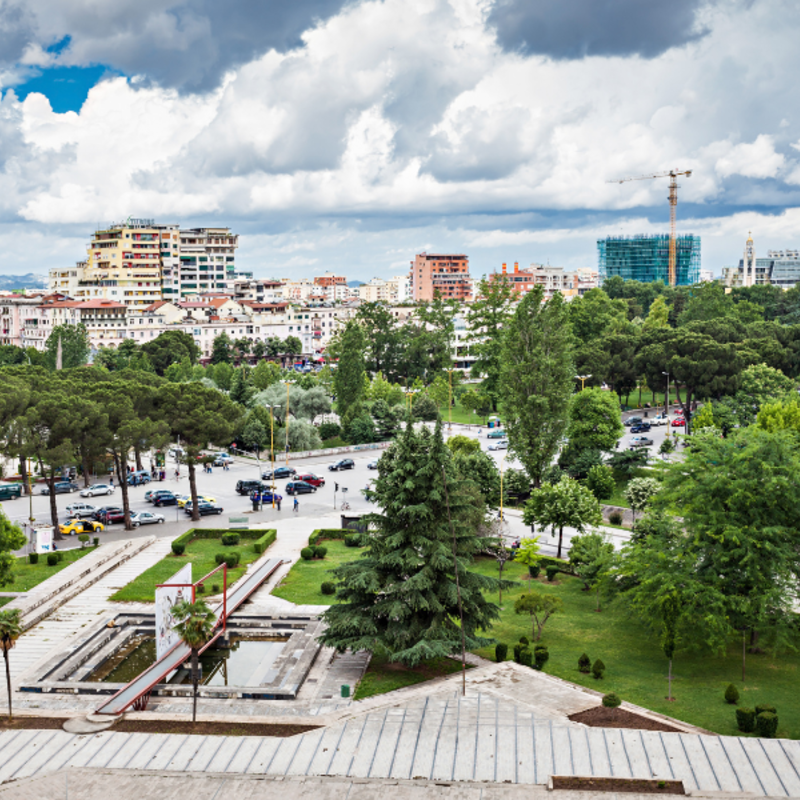
Tirana

Fact-finding mission

The Stockholm Environmental Institute (SEI), a research institute specialized in sustainable development, conducted a fact-finding mission in Albania in July 2025. This mission was requested by the Embassy of Sweden in Albania. It assessed Chapter 27 in detail and then cross-checked findings with key actors, including the Ministry of Environment, Prime Minister’s Office, EU Delegation, and Sida. SEI’s Bora Hajdini, describing the pace and expectations around the process, said that her organization “also felt a lot of pressure,” when they met with government officials during their visit, considering the 2027 ambition. 

After meetings with the government and the local EU delegation, SEI concluded that the institutional coordination and administrative capacities remain weak in Albania – making not the implementation, but the enforcement of necessary EU reform policies the largest problem. Hajdini analyses the lack of enforcement capacity as a long-standing issue in Albania which is also widespread in the region, made worse by heavy reliance on technical support from other countries. 

Implementation and enforcement

Nonetheless, there are positive signals. After the 2025 election, Albania created a standalone Ministry of Environment, which was previously combined with Tourism. SEI sees this detachment as “a step in the right direction,” also because tourism is “sometimes (…) controversial for environment.” But Hajdini warns that a new ministry doesn’t automatically mean better output: much of the work still depends on outside technical assistance and external projects. This means that the question of what will happen when that support stops remains. 

SEI points to one main problem that should be solved in order for Albania to meet its 2027 ambitions. It is not enough for funding to exist on paper; the country also needs the capacity to turn that funding into working projects. Hajdini said they have heard this issue come up many times; Albania is “not well prepared when it comes to funding absorption capacity”. She warns this will become even more visible as the country moves toward larger EU funding programs. While alignment with EU legislation is moving forward, actual implementation and enforcement are still falling behind. Because of that, more attention is needed for administrative capacity, coordination between institutions, implementation, communication, and stakeholder involvement.


When asked about public perception, Hajdini mentioned that citizens’ enthusiasm for EU membership does not automatically mean they understand what accession requires. Albania may be “very much pro-EU accession,” but SEI found that awareness amongst citizens of what membership entails, especially the demands of the environment chapter, is very low. That is why they call for “a strong narrative and communication strategies” that connect reforms to tangible benefits such as economic growth, public health and the quality of life. Universities and private sector actors can support that strategy by helping translate technical policy goals into broader public awareness and engagement.

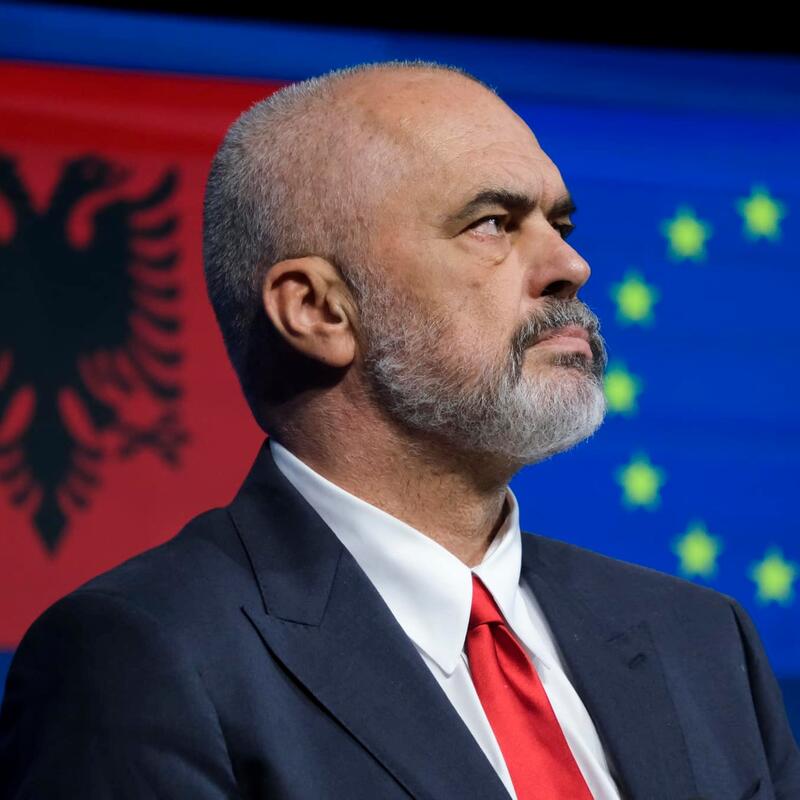
Albania-EU

Looking ahead

Hajdini also touched upon a wider observation: in her view, “Chapter 27 has become so much more complex” than it was in earlier enlargement rounds. She even raised the question whether some existing EU member states would fully meet today’s standards. Altogether, SEI’s message is straightforward: Albania’s 2027 ambition may be possible, but it will depend on whether the country can enforce reforms in practice without needing permanent external support to keep the process going.